
As regular readers know, I’ve been experimenting with homemade bread for months now. In retrospect, I handicapped my learning process by adopting and abandoning several different methods and recipes before perfecting one. After initial success with a no-knead bread technique, I decided to stick with it. Over time, I incorporated techniques and suggestions from several sources and ended up with a pretty foolproof recipe.

- Chad Chandler’s (Almost) No-Knead Bread Recipe
- 3 Cups *King Arthur Unbleached Bread Flour
- 2 Teaspoons Table Salt
- 1 Tablespoon Garlic Powder
- ¼ Teaspoon Instant Yeast
- ¾ Cup Warm Water
- ¾ Cup Beer (plus extra if needed)
- 2 Tablespoons Cider Vinegar
- All Purpose Flour (as needed for dusting work surface and kneading)
- 1 Tablespoon Olive Oil (or an oil with a higher smoke point)
Ingredients:
- Instructions:
- Pour dry ingredients (flour, yeast, salt and garlic powder) into a large bowl and mix with a rubber spatula.

- Add all wet ingredients (water, beer and vinegar) to the dry mixture. Using spatula, fold dough lumps over and over, scraping up dry flour from the bottom of the bowl until it starts coming together. After a while, you should have a big, sticky mass. When done right, you’ll have to scrape the dough off the spatula. If all the flour hasn’t come together after a minute, add a little more beer a splash ata time until it does. It’ll seem to magically go directly from too dry to too wet. That’s normal.

- Cover the bowl with a non-terry cloth towel and let it sit at room temperature for about 16 hours. There’s not much difference between dough that rests for 12-20 hours, but 16 is my arbitrary default.

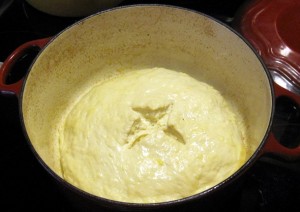
- I know it says “no-knead” in the title, but you need to work the dough a little. If the yeast has done its job over the past 16 hours, the dough ball flattened out and bubbled like this: (the wetter the dough, the larger the mass)

You just need to re-shape it into a ball. Plus, the light kneading process will make it rise more. Lightly flour a work surface and rub some on your hands. Slowly scrape the dough out of the bowl with your finger tips, like this:

Knead the dough just enough times to make it less sticky and form a ball (maybe 15-20 times), adding more flour whenever it starts to stick to the working surface.

- Clean the dough bowl and spray the bottom with non-stick spray (or rub some olive oil around with a paper towel). Drop the kneaded dough ball back into the bowl and let it rise again for 2 hours.

- At about the 1½ hour mark, put a lightly-oiled dutch oven in the middle of the stove and preheat it to 425°. Most recipes call for a 6 quart pot, but my 4 quart Chantal dutch oven (fake Le Creuset from TJ Maxx) works fine. You want to get it really hot before you put the bread in it. That way the bread is baking (and steaming) in an oven inside of an oven.

- At the two-hour mark, carefully take the pot out of the oven and remove the lid. A little smoke should escape. Without distorting the dough ball too much, pick it up and plop it into the center of the heated pot. Using kitchen shears, cut a small, shallow slit in the top of the dough ball to let some steam escape. Cover with the hot lid and put the pot back in the oven.
- After 30 minutes, take the lid off the pot. That’s the only time you should open the oven door. The bread should have risen, but it won’t have much of a crust on it yet.

- After another 25-30 minutes, take the pot out of the oven. Use a towel to lift the bread out of the pot (or flip it upside-down and shake the bread loose) and let it cool on a raised rack for at least an hour.

This recipe might look complicated, but it’s really not. With minimal skill and effort, you end up with this:

The only drawback to my recipe is the time involved. Needless to say, this isn’t an impulse recipe. I usually mix my dough on Friday when I get home from work. It gives me a good excuse to pick up some beer on my way home. Whenever I wake up the next morning, I knead the dough and then run to the farmers’ market to do my weekly grocery shopping. When I get back, I preheat the pot in the oven and cook the bread. As long as the wife doesn’t eat too much over the weekend, it’ll last us the whole week. Whatever is left over goes into the freezer until I need to make bread crumbs.
Once you’ve mastered my basic recipe, learn how to add flavors to your no-knead bread.
*If you’re going to follow this recipe, you must use King Arthur Unbleached Bread Flour (the blue and white bag). King Arthur is high-protein flour, which means it absorbs more liquid than generic, all-purpose flour. If you want to use another brand, you’ll have to cut down on the liquid.
About the pot
People have asked me which dutch oven I use. It’s a 4-quart enameled Chantal (a Les Creuset knock-off) pot that I received as a Christmas present one year. I can’t find this exact pot online, but this one from Lodge looks nearly identical. It’s from a trusted manufacturer and is much cheaper than most of the other brands. If you’re just getting into no-knead bread baking, I highly recommend it as a starting point in your culinary adventure.





Pingback: Another Tip About No-Knead Bread Baking
Pingback: Homemade Braided Challah Bread
Pingback: More Homemade Bread
Pingback: Basic BBQ Pulled Pork
Pingback: Adding Flavor to (Almost) No-Knead Bread
Don’t you risk cracking the ceramic coating on the pot when you preheat it without any moisture in it?
No problems so far. I think heating the pot up gradually with the oven helps.
I didn’t have garlic powder but substituted it for onion powder. it seemed like a bit much to add a whole TBS of this stuff but I figured if you added a TBS of garlic powder and you’re okay, then the onion powder would taste nice. I’ll know in about an hour… What’s your take on this?
It’s not too much. You’ll barely be able to taste it. It takes a lot of seasoning to impact the wet dough. Flavorful toppings are another story. Let me know how it turns out.
I’m surprised at the 16-hours-at-room-temperature part—why not refrigerate? I’ve repeatedly read the low temperature contributes to the development of flavor. Not your experience?
When I make pizza dough, I do a cold ferment over three days in the fridge. The cold slows the fermentation. That means you can use less yeast, but you have to give it time time to develop. For this bread, I usually bake it the next day. I could keep it in the fridge for several days (and use less yeast), and it would probably have a more complex flavor, but I use beer to mimic that funky taste with far less fermentation time. Play around with it and report back if you have the time. This is a versatile recipe.
Pingback: Adding Flavor to No-Knead Bread | Chad Chandler
Pingback: Another Tip About No-Knead Bread Baking | Chad Chandler
I use a pizza stone on which to bake my bread as Dutch ovens are unheard of here in Cyprus.
Love your basic recipe! I have been experimenting with add-ons: cranberries and walnuts, cracked wheat and raisins…Next I will try the honey and rosemary.
Just a note to others reading this: For savory flavors and ingredients I use the 1 tbs of garlic; I omit the garlic when using cranberries, raisins, etc. However the beer stays in Thanks again!